






Much emphasis has been placed upon French bonds recently, where spreads have widened significantly against their German counterparts, but issues in the bond market are not just contained to Europe, Fidelity fund manager Mike Riddell has warned.
While problems in the eurozone show "clear signs that something is starting to break", there is a market on the other side of the world that is already reaching breaking point: Australia.
The country is the "biggest risk position" in Riddell's funds and his reason comes from the housing market, which he said is "breaking in the face of higher interest rates and higher bond yields".
Australia suffered one of the largest bubbles in the world post-global financial crisis, the Fidelity Strategic Bond manager said, which was followed by another from 2012 through to 2019, before Covid became an issue in 2020.
In response, the Reserve Bank of Australia (RBA) had kept interest rates low, allowing more people to afford mortgages and, in turn, drive up property prices.
"The Australian housing market is frankly crazy. You have really, really high house prices in Australia," said Riddell.
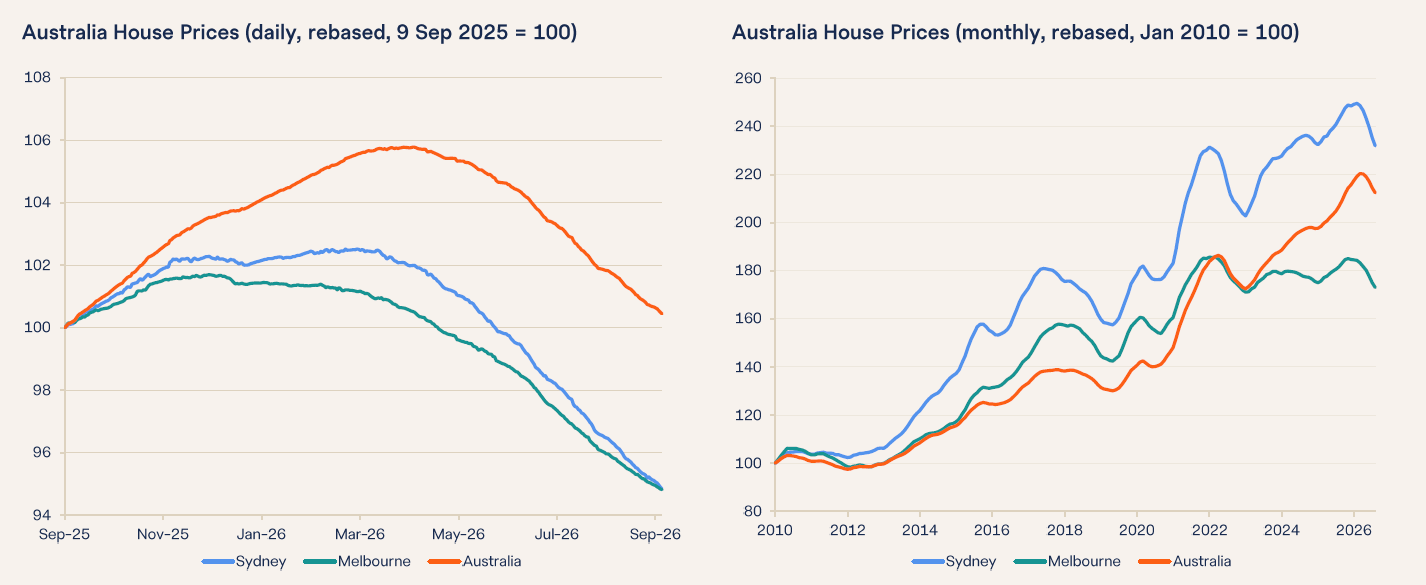
The chart below splits the data into Sydney and Melbourne, where almost half the population lives, as well as the rest of Australia. Prices in the two major cities started to fall earlier this year and have now been joined by other parts of Australia.
Source: Fidelity International
Today, Sydney house prices are about 9% below where they were at the beginning of April this year. Riddell described the current market as "a huge bubble, which I think is now starting to pop, and is popping pretty spectacularly".
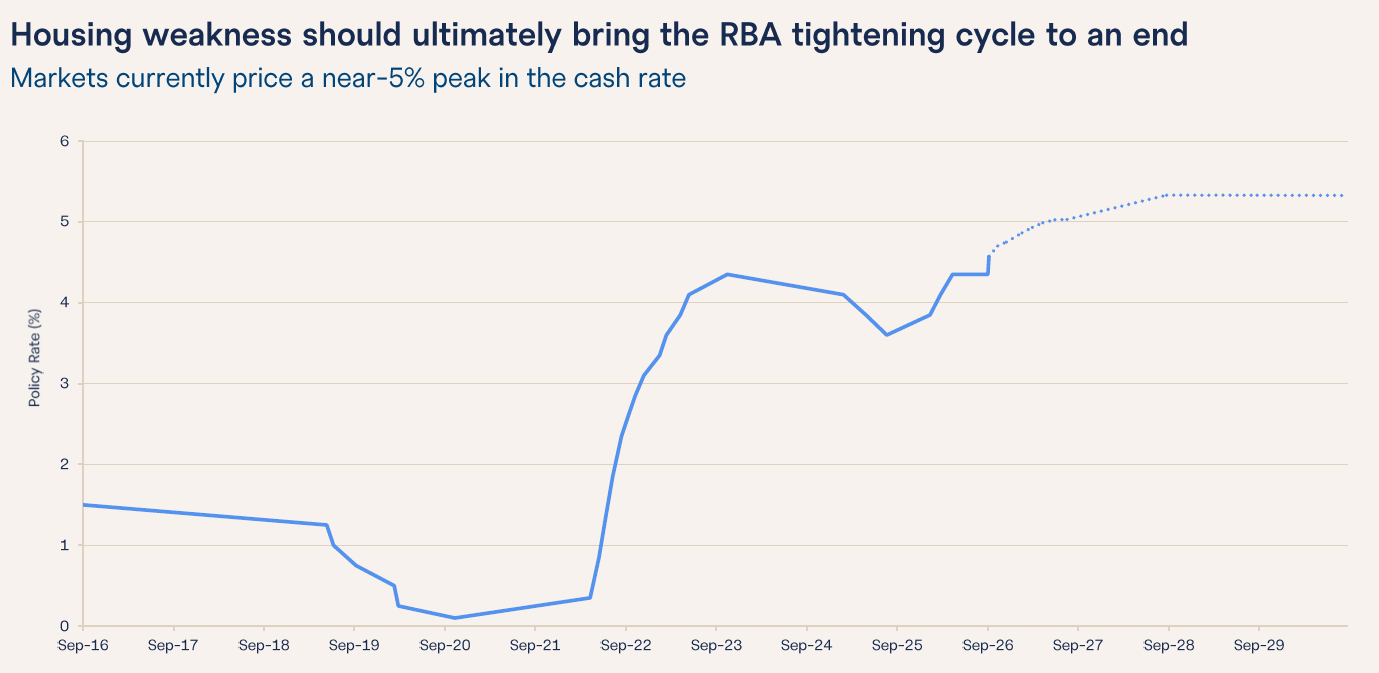
The RBA has raised rates several times this year from 3.6% in January to 4.6% today. However, most of the moves were made by May, when rates stood at 4.35%, with only one more hike made at the latest meeting since.
"What is more incredible about this is that house prices normally follow mortgage rates with about a six-to-12-month lag," he said, although it can depend on the country.
This means that the house price falls over the past few months may not even account for most of the rate hikes so far this year, and certainly not the most recent move.
"We've had three rate hikes that have not even begun to have an impact on house prices in Australia. So I am very confident this [trend of falling house prices] will continue," said Riddell.
The housing market has a bigger impact on Australia's economy than most other countries, as some 25% of the economy is linked to real estate.
"It's not quite as much as China five years ago, but it's not far off," said Riddell.
China's property market crisis exploded when property developer Evergrande ran out of cash and was forced to default in 2021, leaving projects unfinished. This hit home prices and the wider economy.
Although not quite at the same scale, the Australian economy's reliance on the housing market means changes there have a big impact on central bank policy, as well as government bond yields.
"If house prices are falling very sharply – and we're confident they will fall maybe another 10% or more in the next year – you would think that the market would be pricing in interest rate cuts, but it's not," he said.
Despite the interest rate hikes from the RBA, the market is still pricing in another interest rate hike within the next few meetings, with rates priced to stay at about 5% for the foreseeable future, as the chart below shows.
"No interest rate cuts anywhere," said Riddell.
Source: Fidelity International
"Yes, inflation is a bit high, although even the recent data was lower than expected. But to me, this looks completely wrong," he said.
"We might have one more interest rate hike from the RBA, although I think we won't if this becomes a proper crisis in the eurozone, and I am confident there will be cuts in interest rates next year, and there is nothing pricing [that in]."
In his funds, Riddell has two years of interest rate duration coming from Australian government bonds, meaning if interest rates fall 1%, his portfolio will make 2%.
Australia is the third-largest position in the Fidelity Strategic Bond fund with a 10.5% weighting, some 8.5% more than the benchmark. All of this is in Australian government debt.
"So this is a big position. It is my favourite trade," he said.
"We are positioned now for interest rates to fall in some countries. We do think there are too many rate hikes priced in around the world. But this is where actually we have the highest conviction view: that the Australian economy will be in maybe some quite big trouble from around next year."