






The state pension triple lock will be scrapped from 2030 should Labour win the next general election, prime minister Andy Burnham revealed during his speech at the Labour Party Conference today.
The triple lock ensures the state pension rises by the higher of 2.5%, inflation or average earnings.
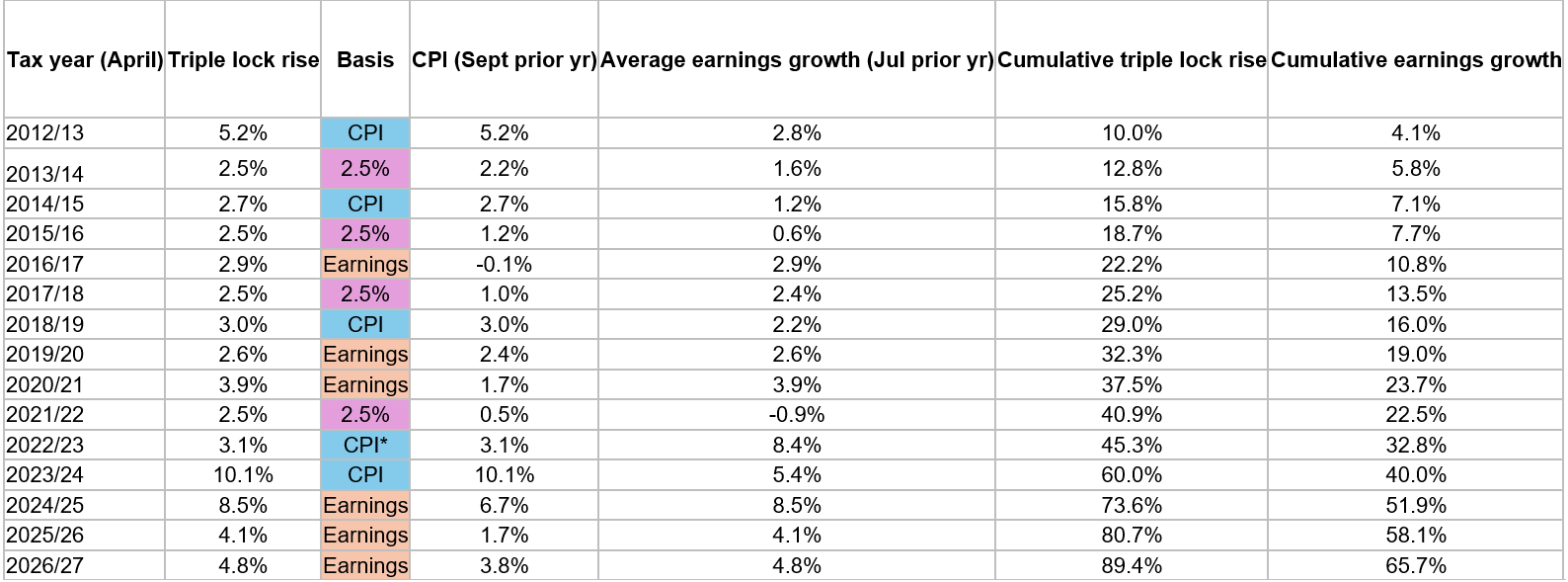
According to AJ Bell, since the triple lock was introduced in 2011, the state pension has risen in line with inflation five times, earnings six times and the 2.5% minimum four times.
The impact of the triple lock on the state pension
Source: AJ Bell
According to previous analysis by Vanguard, under the triple lock the state pension could rise to £13,037 in 2027 – nearly £500 more than the tax-free personal allowance.
However, from 2030, Burnham has proposed that the state pension will move to a double lock, instead increasing in line with prices or by 2.5% every year.
He claimed the change will “generate significant savings” which would be used to fund his proposed National Care Service. This would provide people with free social care at the point it is needed, with no costs paid out of the basic state pension.
Holly Mackay, chief executive of Boring Money, welcomed the announcement.
She said: “Many politicians have kicked this explosive can down the road but I welcome the prime minister’s bold decision to tackle it – bluntly, the nation is pretty broke and we need to have more honest conversations about what is sustainable, what is fair and what we’re all willing to pay for.”
While Adam Cole, retirement specialist at Quilter, agreed that the issue of the triple lock is “a hot potato that no one wants to keep” and reform is needed, he warned that “any discussion about reform must begin with a clear understanding of how important the state pension remains to millions of people”.
Recent research shows the state accounts for almost a quarter of retirement income on average, while among retirees aged 65-79 with incomes of £25,000 or less it provides 57% of their retirement income. For over-80s on below-average incomes, it accounts for 54% of what they live on.
“This is not simply a debate about public spending, but about the financial security of current and future retirees,” Cole said.
By replacing the triple lock, there is a risk that the state pension will gradually lose pace with earnings and cause pensioners’ income to fall in value compared to workers.
Mackay said the state pension does need to be protected from inflation “but it is difficult to make the case that they should continue to increase by wage inflation and/or 2.5% as well”.
“This policy is unfair to younger generations; indeed many of our older readers acknowledge this generational unfairness and accept that the time for reform has come,” she said.
Burnham said the government would ensure the state pension holds its value relative to earnings over time but the detail on how this will be managed has not yet been shared.
Rachel Vahey, head of public policy at AJ Bell, said Burnham’s idea that scrapping the triple lock will fully bankroll social care is “simply fantasy”.
She explained that the triple lock has added around £16bn a year to state pension spending over 15 years yet, with a National Care Service that would make social care free at the point of use potentially costing billions of pounds annually, “the numbers simply don’t stack up”.
As such, there will need to be additional measures to make the National Care Service viable, Vahey noted.
Valentin Boboc, senior economist at the Institute of Economic Affairs, also noted that the National Care Service exposes the biggest problem as the government is effectively proposing a new open-ended spending commitment “while promising to maintain an existing one for years to come”.
“It remains unclear where the money will come from in the meantime, or how rising costs will be controlled,” he said.
Yet social care is a growing cost that also requires addressing.
Research by Rathbones found that many people aren’t preparing for future social care costs, yet 40% of surveyed affluent UK adults ranked the cost of long-term or residential care among their top three retirement concerns.
Alongside the pensions announcement Burnham also unveiled his plans to reform water ownership, the UK’s energy mix and leaseholds.
Continuing the tone adopted by chancellor John Healey during his speech on Monday, Burnham also emphasised he would stick to the fiscal rules to get borrowing and debt down, spending only what the country can afford.