






For much of the past three decades, investing in Japan came with a familiar set of assumptions. The country was a low-growth economy constrained by demographic decline. Deflation was entrenched, wage growth was scarce, interest rates were permanently close to zero and a weaker yen was an unqualified positive.
These narratives have shaped the way many international investors assess Japanese equities. But as the country emerges from an extended period of economic stagnation, these assumptions, which were once based on reality, are now enjoying an afterlife as myths as Japan changes faster than investors can adapt.
Changes in inflation, wages, monetary policy and corporate behaviour suggest that investors should revisit some of the conventional wisdom that has defined Japan for a generation. Let’s explore the five myths.
Japan is permanently trapped in low growth
Japan's demographic challenges remain significant. A shrinking population and labour force continue to place limits on the country's long-term growth potential. However, focusing solely on demographics risks overlooking important developments elsewhere in the economy.
Japanese companies are investing heavily in productivity-enhancing technologies, including automation, artificial intelligence and digital transformation. Faced with labour shortages, businesses have become increasingly motivated to improve efficiency and generate greater value from a smaller workforce.
Perhaps more importantly, inflation has begun to alter behaviour across the economy. For years, consumers delayed spending and companies held back on investing because prices were expected to remain flat or fall. Today, rising prices and wages are gradually changing those expectations.
We’re now seeing a more dynamic economy where investment, wages and consumption reinforce one another in a healthier cycle than investors have become accustomed to seeing.
Higher interest rates are bad for Japan
The Bank of Japan's move away from ultra-loose monetary policy has prompted concerns among some investors who remember earlier periods when policy tightening threatened to derail the economy. Yet viewing today's rate increases through that historical lens is misleading.
Even after recent policy changes, real interest rates remain low by international standards. Financial conditions continue to support economic activity, while businesses and consumers are operating in an environment characterised by improving demand and a more normal inflation backdrop.
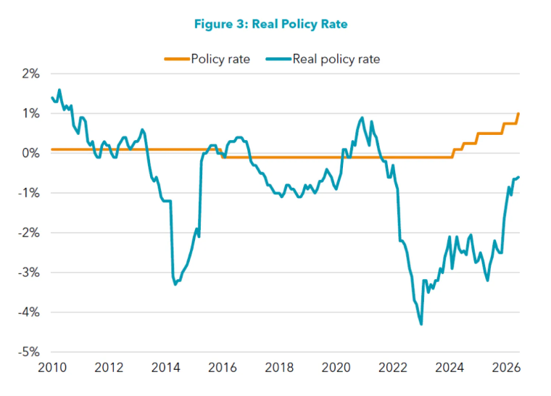
Source: SuMi Trust
Rather than signalling economic weakness, higher interest rates are better understood as evidence that Japan is moving towards a more conventional economic framework. In this context, policy normalisation can be interpreted as a sign of confidence in the economy's resilience rather than a threat to growth.
Japan's debt points to an inevitable future crisis
Japan continues to have one of the highest public debt burdens among developed economies, making fiscal sustainability a legitimate concern.
Current Japanese fiscal policy is expansive and this has rattled the bond markets. Well-designed fiscal policy that supports sustainable growth and productivity improvements could nevertheless help Japan ameliorate its debt problems.
Measures that encourage investment, innovation and competitiveness may have a very different long-term impact from policies focused solely on short-term stimulus.
Rising wages will damage corporate profitability
Japanese companies have historically enjoyed relatively stable labour costs, leading some investors to view wage growth as a potential threat to margins. Recent wage negotiations have now delivered some of the strongest pay increases seen in decades.
However, while higher wages increase costs, they can also strengthen domestic demand and support revenue growth.
Companies that possess pricing power and can successfully pass rising costs on to customers are often well positioned to maintain profitability while participating in a broader cycle of rising incomes and stronger consumption.
This creates a more nuanced investment environment. Rather than asking whether wages are rising, investors should focus on which companies have the business models, competitive advantages and operational flexibility to thrive within a higher-wage economy.
A weak yen is always good news
Many exporters and global businesses still gain from improved international competitiveness and the higher yen value of overseas earnings. However, the Japanese economy of 2026 is very different from that of previous decades.
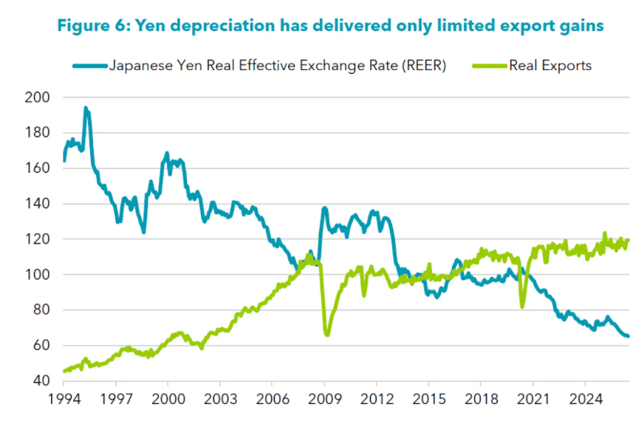
Source: SuMi Trust
Supply chains are increasingly global, many overseas profits are reinvested abroad and Japan remains heavily dependent on imported energy, food and raw materials. A weaker currency therefore also raises costs for households and businesses.
As a result, the economic impact of currency weakness has become more balanced and more complex. Investors should distinguish between the benefits a weaker yen may bring to specific companies and its broader effects on the national economy.
Looking beyond old narratives
Structural challenges have not disappeared, and investors should be cautious about declaring the arrival of a completely new era. Nevertheless, many of the assumptions that shaped investment decisions over the last 30 years deserve thorough re-examination.
The return of inflation, rising wages, changing corporate behaviour and a normalising monetary policy environment suggest that Japan is no longer the economy many international investors think they know.
Kei Fujimoto is a senior economist at SuMi Trust. The views expressed above should not be taken as investment advice.