






Inflation was widely expected to fall back to the Federal Reserve’s 2% target this year but the energy shock, tariffs and the expenditure on AI have stopped this from happening, according to former secretary of the Treasury and Fed chair Janet Yellen.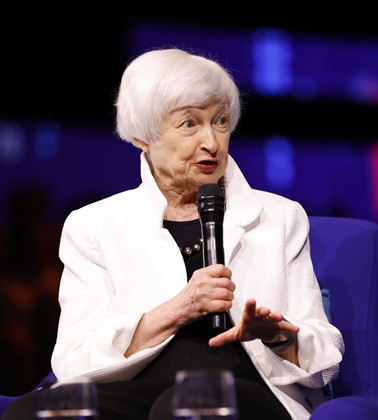
Speaking at the Amundi World Investment Forum, she said: “Without any of these three supply shocks, I believe it was widely expected to fall this year back to 2%.”
Had this happened, in combination with a labour market that is “holding up” and restrictive monetary policy, it was assumed that the Fed would be able to cut rates.
However, first came US president Donald Trump’s Liberation Day tariffs, which imposed a 10% tax on all goods entering the country as a baseline, with significantly higher charges levied on specific countries such as China.
That was a “one-time effect”, Yellen said. While it took some time to play out, there was the assumption that it would “wash out” and that core inflation would be back to 2% “right about now”.
This has not come to pass. Data released on Wednesday last week revealed the US consumer prices index jumped back above 4% for the 12 months through to May (4.2%), with core inflation up 2.9%.
The latest inflation spike has been a result of the energy shock brought on by the war in Iran, which has led to the closure of the Strait of Hormuz.
“We don't know how long the disruption is going to last, so there's tremendous uncertainty,” she said, adding that the latest supply shock will continue to keep inflation above the Fed's target “at least for the remainder of this year and into next”.
The final shock has been the massive investment in artificial intelligence, which is pushing up electricity prices and semiconductor prices that are incorporated in a huge range of consumer products, said Yellen.
“You could argue that each one of the things I mentioned are supply shocks and should have a one-time impact on the price level. And central banks, at least the Fed, typically look through such shocks,” she said.
“But it's now been five years that inflation has been above the Fed's target,” she added, with expectations that this will continue this year and in 2027. With the AI boom, this could even be extended into 2028.
It could go even further – rebalancing inflation expectations over the medium and long term. While inflation has historically been “well anchored”, there has been one supply shock after another and with every year that inflation fails to get back to target, the risk is that higher prices become "ingrained”.
What will be the Fed’s next move?
With inflation higher than expected, there could be calls to raise rates. However, Trump has been vocal in his desire for rates to come down. Additionally, the labour market, which once looked “fragile” is now “the opposite”, said Yellen.
“I wouldn't expect an interest rate increase in the next several months. I think that would be very unlikely, especially with the uncertainty about oil,” she said, although it is possible.
Conversely, “any case for a cut in rates has really disappeared”, she noted, with markets now pricing this in.