






Cloud computing and cybersecurity ETFs, gold miners and energy funds led the third quarter of 2026, while funds exposed to China, US small-caps, property and long-dated bonds fell furthest.
Below, Trustnet runs through how the past quarter unfolded and which funds and trusts finished at either end of the table.
How the quarter played out
Markets spent July worrying about AI spending, with Korea's Kospi down 16.6%, while oil jumped from $72 to over $90 after the US-Iran ceasefire collapsed. Yields climbed despite central banks holding rates, with the US 10-year rising from 4.47% to 4.73% and the 10-year gilt from 4.76% to 5.05%.
In August, gold gained over 9% to $4,481 and commodities rose 5.3% in sterling, while property lagged on fears of US rate rises.
September's 25bp Fed hike, to 3.75–4%, pushed the US 10-year to its highest since 2007. Oil ended the month up 7.3% after wide swings and gold gave back about 6.7%.
Nearly every losing fund or trust sector in the third quarter is sensitive to oil prices, higher inflation and interest rates.
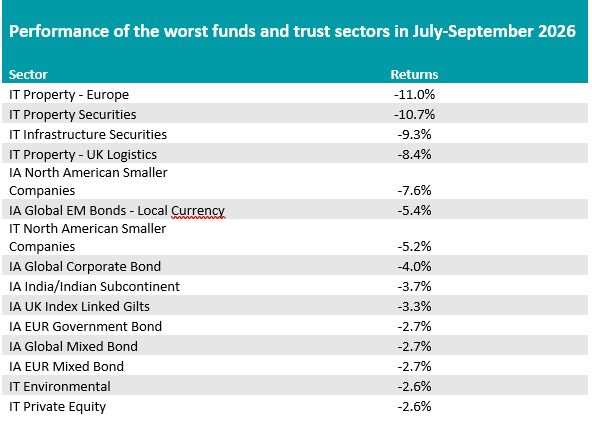
Source: FinXL. Average return in sterling between 1 July and 30 Sep 2026.
As the table above shows, among the hardest hit were US small-caps, with the average fund down 7.6% and trusts falling 5.2%. This came after the Russell 2000 was up about 21% in the year to June against 10% for the S&P 500.
Goldman Sachs figures cited by The Motley Fool show about 32% of Russell 2000 companies carry floating-rate debt, against 6% for the S&P 500, meaning that their interest bills rise with each hike.
Looking at the individual names, VAM US Micro Cap Growth lost 15.5%, Heptagon Driehaus US Micro Cap Equity fell 14.5% and Polen Capital 5Perspectives US Small was down 13.9%.
On the positive side, the average IA UK Smaller Companies fund was up 6.6%, ahead of IA Infrastructure on 5.1% and IA UK Equity Income on 3.7%.
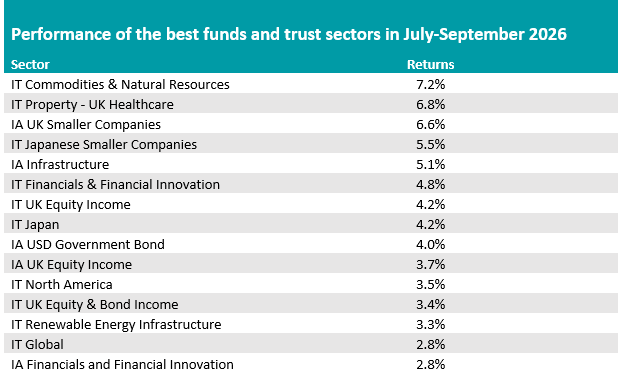
Source: FinXL. Average return in sterling between 1 July and 30 Sep 2026.
In July, the month Andy Burnham became prime minister and the FTSE 100 hit a record 10,989, UK funds benefited from having little exposure to mega-cap tech to lose, while Shell, the banks and Unilever beat expectations.
Aberforth UK Small Companies made 12.1% and VT Teviot UK Smaller Companies 11.5%. Among trusts, IT UK Smaller Companies averaged 9.8% and Onward Opportunities led the whole trust table with 30.8%. Odyssean Investment Trust made 15.4%.
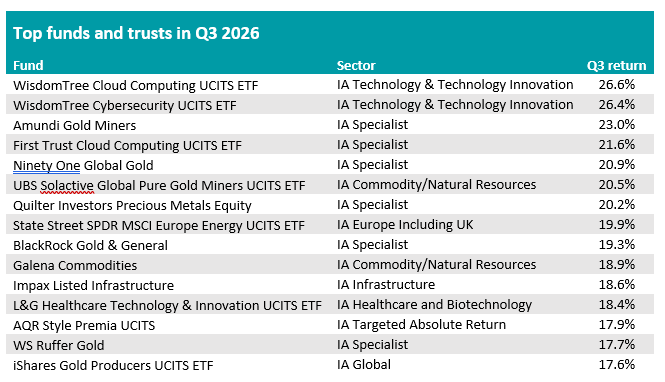
Source: FinXL. Total return in sterling between 1 July and 30 Sep 2026.
WisdomTree Cloud Computing UCITS ETF topped the fund table with 26.6%, just ahead of WisdomTree Cybersecurity UCITS ETF on 26.4%. The cybersecurity theme proved popular, with a surge on 14 September when AI leaders called for a slower pace of AI build-out.
While cybersecurity rose, AI and quantum computing funds went the other way. Polar Capital Artificial Intelligence lost 10.1% and WisdomTree Quantum Computing 11.5%.
Gold miners filled much of the rest of the top 15. Amundi Gold Miners made 23% and Ninety One Global Gold 20.9%, even though the metal itself fell back in September. Miners tend to move by more than the metal, because their profits depend on the gap between the gold price and their costs. WS Ruffer Gold made 17.7%.
Energy funds benefited from rising oil prices, with State Street SPDR MSCI Europe Energy up 19.9% and Guinness Global Energy making 16%.
Things were more polarised in the IA Commodity/Natural Resources sector, which averaged a 2.1% loss. While energy and gold funds were among the third quarter’s best performers, Invesco Solar Energy UCITS ETF, iShares Global Clean Energy Transition and WisdomTree Renewable Energy UCITS ETF were at the bottom of the Investment Association universe.
Higher oil prices helped producers, while rising rates hurt renewable developers that borrow heavily to build projects.
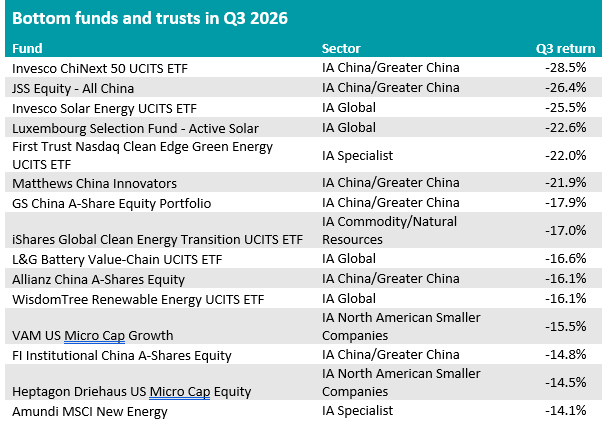
Source: FinXL. Total return in sterling between 1 July and 30 Sep 2026.