






I am usually not prone to irrational behaviour or falling prey to fear, but when I first heard of Mythos, Anthropic's new AI cybersecurity model, and that UK banks were being given early access to it, my first thought was a panicked: the banking system is going to collapse.
Mythos is an AI built to find vulnerabilities in software – the kind that hackers exploit to get inside systems. According to Anthropic's own research, the model has already identified thousands of high-severity vulnerabilities in popular software and flaws in nearly every major web browser. Were banking systems next?
Dario Amodei, Anthropic's chief executive, called cyber "the first clear and present danger from AI models." Sam Woods, head of the Prudential Regulation Authority, told a UK Finance event to expect "quite significant disruption" to financial services. The Bank of England put Mythos on the agenda of the group whose members include the CEOs of Britain's eight largest banks.
That is a lot of alarm in a short period of time and it was easy to imagine apocalyptic scenarios. Surely I’d be better off closing my bank account and storing all my money under the bed.
But then, the day after Anthropic announced Project Glasswing (its controlled release to around 50 organisations including Microsoft, AWS and cybersecurity companies CrowdStrike and Palo Alto Networks) shares in CrowdStrike and Palo Alto added 3% and are up 5% and 12% respectively over six months. So maybe that’s where my money should go instead?
Performance of shares over 6 months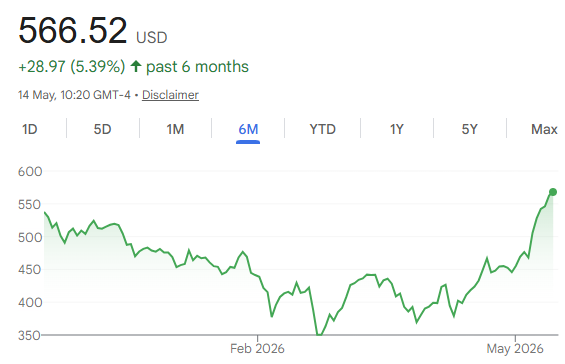
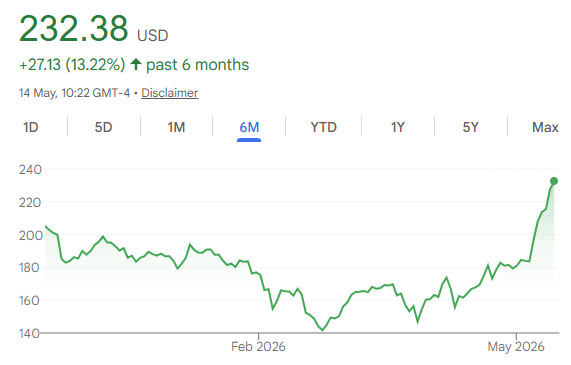
Source: Google Finance
Pictet's recently published Ahead 2026 trends report cites research showing a hacker infiltration every 39 seconds and an estimated 3.8 million records stolen through breaches every day. Global spending on cybersecurity is forecast to grow by nearly 14% a year.
Pictet called this "a big challenge for the cybersecurity industry” but also “a big opportunity for security companies that can harness AI's power to protect organisations and consumers."
At the losing end of the trend are software-focused tech companies. Since last October, the global software and services sector has fallen by more than 25%, with valuation multiples compressing from 34 times earnings to 22 times, as Fiona Ker, fund manager at Ruffer, noted.
But when disruption is so big, it often pays to take a step back.
“The bear case cannot be disproved. But the market may be under-appreciating some of these companies' resilience,” she said. Ruffer has started a contrarian position in these names.
Looking at this with a cool head, you realise the same people now warning that Mythos could bring down banking infrastructure spent 2023 talking to media about how AI would end the world.
Then, when the end-of-the-world narrative started sounding too bleak, the talk shifted to AI as productivity tools to help people save time.
CNBC spoke to cybersecurity researchers last week who called the industry response to Mythos "hysteria" and noted a similar capability to find vulnerabilities at scale had existed for more than a year before Mythos arrived.
Sounding the alarm bells (as has been done with AI and now with Mythos) stokes fears and can move some money. But beyond the excitement and the worry, machines may already be working in the background.
Pictet flagged "machines hacking other machines" as a growing concern but the same logic implies machines patching other machines – the cyber war of the next decade may be fought between AI systems beneath a banking infrastructure that keeps quietly working.
For now, my money will stay where it is. The true nature of my worry, I now realise, wasn’t for a financial and societal collapse per se, but simply a reflection of the powerlessness in the face of the rapid changes unfolding around me.