






“There’s a lot to worry about” when it comes to US finances, according to former Federal Reserve chair Janet Yellen, who has warned that the debt taken out during the low interest-rate era before the pandemic has become a challenging issue today.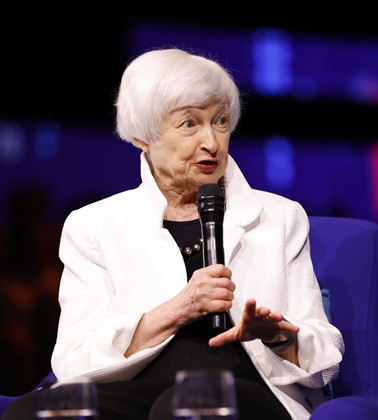
“I'm particularly worried about financial stability risks from sovereign debt. The United States is running very large deficits – the largest outside of wartime and outside of a recession – around 6% of GDP,” the former US Treasury secretary said.
“We're on an unsustainable course with respect to fiscal policy.”
During the almost zero-rate regime, the expectation had been that rates would remain low for the foreseeable future. This led to a rapid expansion of debt.
At this time, US debt to GDP ratio stood at around 90-95%, a figure that was high but was acceptable providing interest rates stayed low, as this meant the debt burden would remain under control.
“While 90% or 95% is a high debt-to-GDP ratio, the interest burden is very low and that's not so worrisome,” Yellen told the Amundi World Investment Forum.
However, we are now in a “completely different rate environment” following the pandemic, with central banks around the world having raised rates to combat persistent inflation.
“Interest rates are higher and the debt burden is no longer at the low level that prevailed when I thought there was nothing to worry about. Now I think there's a lot to worry about,” she said.
Indeed, the amount the US spends on interest payments for its debt has now exceeded its total spend on defence, she noted.
Despite this, there seems to be little appetite for reducing the deficit, with the US continuing to issue a lot of debt despite its already mounting burden.
Yellen warned that reducing the deficit “cannot be done in a painless way”, which makes it politically unpopular regardless of the party in power.
“It has to involve higher taxes or lower spending on programmes that support retirement, [such as] social security or Medicare,” she said.
This is not solely a government bond issue, however, with Yellen noting that there is “a lot of duration risk and refinance risk sitting out on balance sheets” that must be addressed.
When she was Treasury secretary in 2023, she saw first-hand the effects this can have when Silicon Valley Bank collapsed.
“We had to struggle to make sure we didn't have a banking crisis, as banks had taken on long-maturity debt that wouldn't have been sensible if they knew that interest rates were going to rise,” said Yellen.
There is no evidence of an “immediate crisis”, she noted, but there is a world where the market starts to redefine “what the appropriate level of compensation is for fiscal risk”.
“I could imagine an abrupt rethinking by market participants about what the appropriate level of longer-term interest rates are and that could affect valuations and leveraged investors in many sectors of the economy – and could trigger financial instability,” the former Fed chair said.